

In 2026, the digital marketing fundamentals continue to evolve rapidly, driven by advancements in technology and shifts in consumer behaviour. From artificial intelligence and voice search optimisation to stricter data privacy expectations, the way businesses connect with customers is changing every year.
However, while tools and platforms evolve, the principles behind effective marketing remain the same.
For business owners, freelancers, and start-ups, long-term success stems from developing a clear digital marketing strategy, utilising the right digital marketing tools, and prioritising consistent digital marketing growth over short-term trends.
This step-by-step checklist outlines what truly matters in 2026.
Understanding the Modern Digital Landscape
Today’s consumers are more informed and selective than ever, as they research online, compare competitors, and interact with brands across multiple platforms before making a purchase.
Moreover, the rise of social media platforms, video content, and even augmented reality experiences is reshaping how brands engage with their audiences. Meanwhile, data privacy has also become a priority, with customers expecting transparency and the secure handling of their information.
Understanding these changes is essential for developing strategies that genuinely resonate with modern customers.
Key Components of a Successful Digital Marketing Strategy
A successful digital marketing strategy in 2026 relies on several core elements:
- A clearly defined target audience
- Specific and measurable objectives
- Consistent brand messaging
- A multi-channel approach
Businesses must leverage platforms such as search engines, social media, and email marketing to maximise reach and visibility.
However, rather than relying on one tactic, combining multiple channels ensures steady performance and stronger results.
Step 1: Define Your Audience and Goals
Clarity forms the foundation of every successful marketing activity, so start by asking yourself:
- Who are your ideal customers?
- What problems are they trying to solve?
- How does your service or product help them?
- What outcomes do you want to achieve?
Clear goals allow you to measure success and allocate your budget wisely. Without direction, however, even strong efforts can fail to deliver meaningful returns.
Step 2: Build a Strong Digital Foundation

Your website is the centre of your online presence, often the first impression customers have of your business, so it should be:
- Mobile-friendly
- Fast and responsive
- SEO-optimised
- Easy to navigate
- Secure and reliable
A well-optimised site improves credibility, increases visibility in search engines, and supports higher conversion rates. Therefore, strong technical foundations remain one of the most important digital marketing fundamentals.
Step 3: Use the Right Digital Marketing Tools
To thrive in today’s competitive landscape, businesses must adopt essential tools and technologies, including:
- Customer Relationship Management (CRM) systems
- Email marketing platforms
- Marketing automation software
- Analytics dashboards
- AI-powered tools
These digital marketing tools streamline operations, save time, and provide clear performance insights. Additionally, automation allows businesses to nurture leads and maintain communication without increasing workload.
Step 4: Create Engaging Content That Drives Results
Content remains one of the most powerful drivers of traffic and engagement.
In 2026, brands must focus on creating high-quality, valuable content that not only informs but also engages and inspires, with effective formats including:
- Blog articles
- Short videos and reels
- Live streams
- Case studies
- Interactive content
Furthermore, storytelling plays a vital role, as brands that communicate their values, expertise, and real-world experiences build stronger emotional connections with their audience, leading to higher trust and conversions.
Step 5: Personalise Responsibly and Protect Data
Personalisation is becoming increasingly important, since customers respond better to tailored messages and relevant offers.
Using data analytics, businesses can segment audiences, send targeted campaigns, recommend suitable services, and improve customer journeys.
However, personalisation must be handled responsibly. With growing privacy concerns and regulations such as GDPR, businesses must ensure consent-based marketing, secure data storage, and transparent policies.
Trust is now a competitive advantage; therefore, protecting customer data is just as important as generating leads.
Step 6: Integrate AI for Smarter Marketing
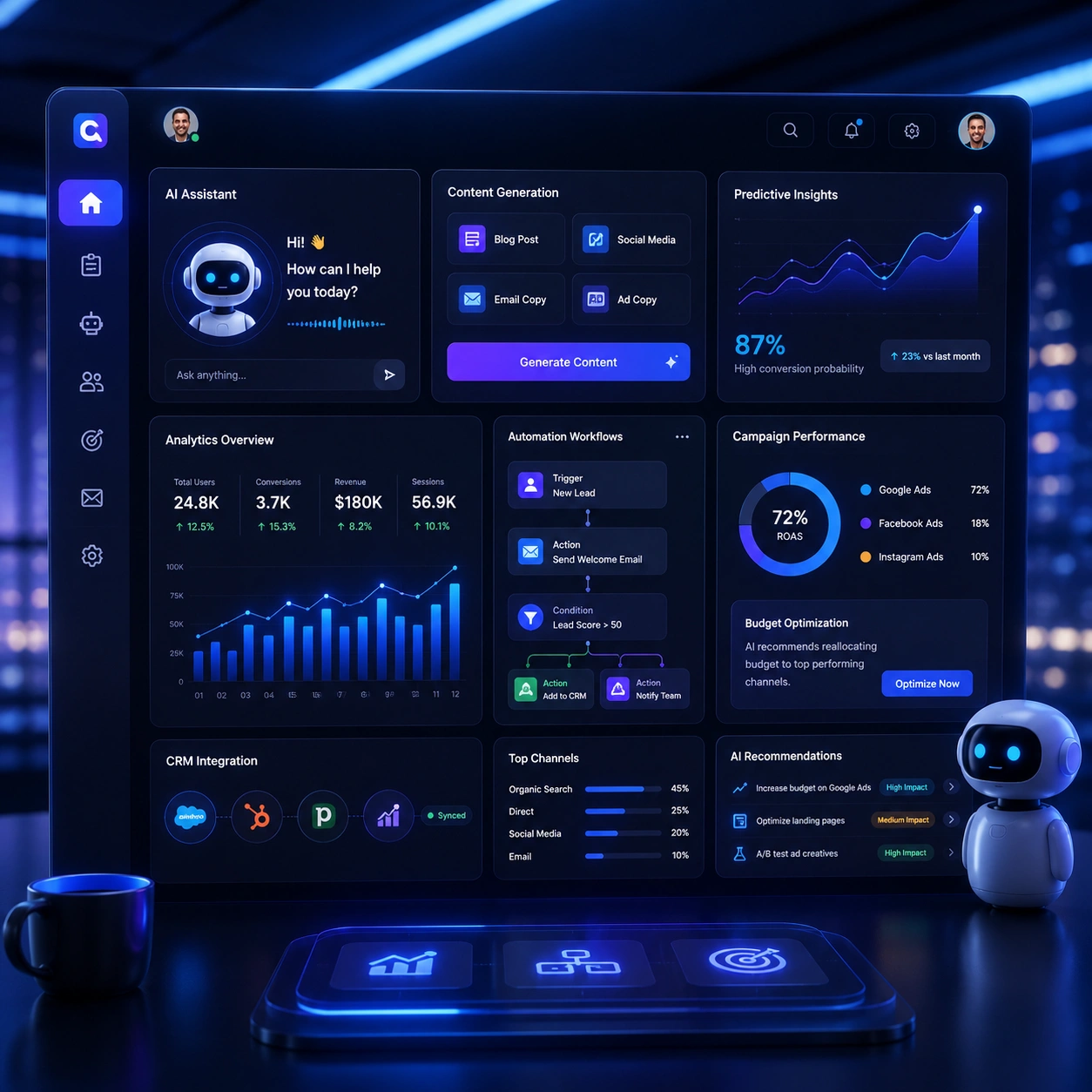
Artificial intelligence is revolutionising the way marketing teams operate.
AI can support content creation, market research, performance analysis, campaign optimisation, and workflow efficiency.
By automating repetitive tasks, AI allows marketers to focus more on strategy and creativity. Moreover, the most effective approach is a balance between technology and human expertise.
Step 7: Measure and Optimise Performance
Measuring and analysing your digital marketing efforts is essential for understanding what works and what does not, with key performance indicators (KPIs) to track, including:
- Conversion rates
- Engagement levels
- Leads generated
- Customer acquisition costs
- Return on investment
Regularly reviewing analytics helps refine campaigns, improve efficiency, and guide future decisions. Ultimately, a data-driven approach leads to smarter investments and continuous improvement.
Digital Marketing Growth Checklist
Use this checklist to stay focused:
- Define your audience and goals
- Optimise your website for SEO and performance
- Use reliable digital marketing tools and automation
- Maintain a strong presence across multiple channels
- Produce consistent, high-quality content
- Personalise responsibly and protect customer data
- Integrate AI where it adds value
- Track results and optimise regularly
Final Thoughts
Digital Marketing Fundamentals 2026 is not about complex tactics or expensive campaigns. They are about mastering the basics, building trust, and using technology wisely.
Businesses that develop a clear digital marketing strategy, leverage the right tools, and focus on delivering genuine value will achieve sustainable digital marketing growth.
Start with strong foundations, stay consistent, and scale strategically. That approach continues to deliver results—regardless of how the digital landscape evolves. If you’re a startup, freelancer, or business owner wanting to boost your website traffic and conversions, get your personalised digital marketing services plan tailored to your business today.
FAQ
Frequently Asked Questions
What are digital marketing fundamentals?
Digital marketing fundamentals are the core principles that help businesses build a successful online presence through SEO, content marketing, social media, email marketing, analytics, and customer engagement.
Why are digital marketing fundamentals important?
Strong digital marketing fundamentals improve brand visibility, generate qualified leads, increase customer engagement, and support sustainable business growth in an increasingly competitive digital landscape.
Which digital marketing tools should businesses use?
Businesses should use CRM platforms, analytics tools, email marketing software, SEO tools, AI-powered marketing solutions, and automation platforms to improve efficiency and campaign performance.
How does AI improve digital marketing?
AI supports content creation, customer segmentation, marketing automation, predictive analytics, campaign optimization, and performance reporting, allowing marketers to focus on strategy and creativity.
How can businesses measure digital marketing success?
Businesses should monitor KPIs such as website traffic, conversion rates, customer acquisition cost, engagement, lead generation, and return on investment (ROI) to continuously improve marketing performance.
Review
Digital Marketing Fundamentals Guide
This guide provides a practical roadmap for businesses to master digital marketing fundamentals through SEO, AI, content marketing, automation, analytics, and customer-focused strategies for long-term growth.
E-E-A-T
Editorial Trust
Author bio: The MAQ Team specializes in digital marketing, SEO, AI-powered marketing, website development, and business growth strategies. Our experts help startups, SMEs, and enterprises improve online visibility through data-driven marketing solutions.
Editorial note: This article is based on current digital marketing trends, Google best practices, AI marketing developments, and proven industry strategies. It has been reviewed to ensure accuracy, relevance, and practical value for businesses in 2026.
Experience
Our recommendations are based on years of experience delivering SEO, PPC, social media marketing, AI automation, website optimization, and digital marketing campaigns for businesses across multiple industries.
Expertise
Digital Marketing Strategy, Search Engine Optimization (SEO), Content Marketing, AI Marketing, Marketing Automation, Google Ads, Analytics, Lead Generation, Social Media Marketing, Conversion Rate Optimization.
Authoritativeness
MAQ has extensive experience providing digital marketing, SEO, AI automation, and website development services that help businesses improve visibility, increase qualified leads, and achieve long-term digital growth.
Trustworthiness
Our content is created using verified marketing practices, official search engine guidelines, and practical implementation experience. Every article is reviewed regularly to ensure it remains accurate, relevant, and aligned with evolving digital marketing standards.
Related Reading
More from the blog

How Can UAE Businesses Use AI SEO Tools to Get Brand Mentions?
Learn how AI SEO tools help UAE businesses improve Google rankings, appear in ChatGPT, Gemini, and Perplexity responses, and increase brand visibility through AI-powered search optimization.

npm ERR! ERESOLVE unable to resolve dependency tree
Facing the npm ERR! ERESOLVE unable to resolve dependency tree error while installing packages or creating a React project? In this guide, I'll explain why it happens, how I fixed it, and the safest solutions that actually work in 2026.
Shopify Segment Triggers: Elevate Your Marketing Strategy
Discover how to automate your e-commerce marketing workflows seamlessly. Learn how to set up VIP welcomes, birthday emails, and personalized customer journeys to boost sales and brand loyalty.